What are they and how are they different from each other?
RECs vs Carbon Credits
Introduction
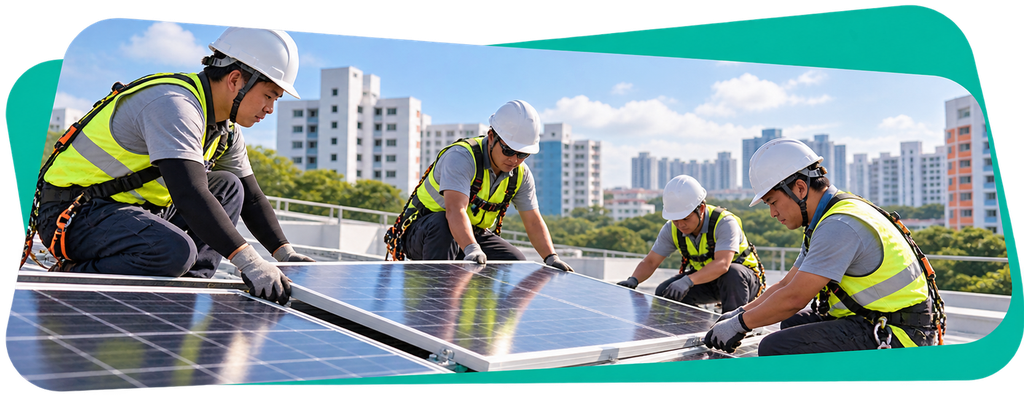
For many businesses in Singapore, making the switch to solar power is a significant step. For many people, the benefits are easy to understand: lower long-term electricity costs, greater energy awareness, and the opportunity to support a more sustainable future. What feels less clear is what actually happens once you decide to move forward.
The good news is that the solar panel installation process is typically more structured than many expect. Below, we break things down step by step to help you know what to expect at each stage and approach the experience with more confidence.
Key takeaways
-
The solar panel installation process involves more than installation day alone and typically includes assessment, system design, approvals, installation, testing, and ongoing monitoring.
-
Early site assessments help determine whether solar power is suitable for your property while identifying potential limitations before major planning begins.
-
In Singapore, approvals, licensing requirements, and coordination with stakeholders can sometimes take longer than the physical installation itself.
-
Ongoing monitoring and maintenance help businesses maintain performance and maximise the long-term value of their investment.
-
If rooftop solar is not feasible, businesses can still support cleaner energy goals through alternative solutions such as renewable electricity plans and Renewable Energy Certificates (RECs).
What the solar panel installation process looks like
Step 1: Initial consultation and site assessment
During the initial consultation, the installer typically reviews factors such as your electricity consumption patterns, operating hours, business goals, and available building space. This helps determine whether solar is suitable and how large the system may need to be.
They will also visit your property to conduct a site assessment. Here, they’ll evaluate factors like:
- Available roof area
- Roof orientation and exposure to sunlight
- Potential shading from nearby buildings or structures
- Structural suitability of the roof
- Existing electrical infrastructure
For businesses, this stage helps determine whether solar panels are practical for the building and likely to deliver meaningful value over time. It also helps uncover any limitations upfront, giving businesses more time to adjust plans and avoid unexpected changes later in the project.
Step 2: System design and quotation
Once the assessment is complete, the installer will develop a proposed system design. Here, they transform technical findings into a plan that your business can evaluate from both operational and financial perspectives.
A typical proposal may include:
- Recommended system capacity
- Estimated electricity generation
- Equipment specifications
- Installation scope
- Project timeline
- Cost estimates
- Estimated savings and payback considerations
At this stage of the solar panel installation process, businesses should look beyond upfront cost alone. Consider asking some questions, such as:
- How much electricity is expected to be offset?
- Will the system support future business growth?
- What monitoring capabilities are included?
- How are maintenance requirements managed?
This stage lays the foundation for the rest of the project, allowing you to move forward with clearer expectations around investment, timelines, and expected energy outcomes.
Step 3: Approvals and preparations before installation
Once the system design is confirmed, the project moves into the approval and preparation stage. In Singapore, most solar systems must be properly connected to the national electricity grid and installed in accordance with local safety requirements.
A qualified Licensed Electrical Worker (LEW) is usually involved to assist with the installation and submit the solar photovoltaic (PV) connection application. Depending on the system size and property type, additional licensing or registration requirements may also apply. For example, larger solar PV systems may require electricity generation licences from the Energy Market Authority (EMA).
For rooftop installations, the property itself must also be considered. In Singapore, solar projects may involve checks related to structural safety, planning permission, and fire safety, with relevant authorities depending on the project scope. For businesses operating in leased offices, commercial buildings, industrial properties, or shared facilities, approval from landlords and building owners may also be needed before installation can proceed.
As a result, the approval stage often takes much longer than installing the solar panels themselves. For businesses, this can also be one of the most useful reasons to work with an experienced energy partner. Flo Energy can help manage the solar journey from start to finish, from assessing feasibility and designing the system to coordinating approvals, installation, and activation. This allows you to move towards cleaner energy with a lighter administrative burden and greater confidence throughout the process.
Step 4: Installation day
Once approvals and scheduling are complete, installation work can begin. For most commercial projects, the installation team will first prepare the work area, confirm roof access, check safety arrangements, and ensure that equipment can be moved to the installation area without unnecessarily disrupting daily operations.
During a typical solar panel installation, the team will usually install the mounting structures first. These are fixed to the roof to hold the panels securely in place and are positioned in accordance with the approved system design. The solar panels are then mounted on these structures and aligned to capture sunlight as efficiently as possible, given the roof layout.
The electrical components come next. This usually includes setting up the inverter, which converts the electricity generated by the panels into usable electricity for the building. The system is then connected to the property’s electrical infrastructure, with wiring routed carefully and safety checks carried out along the way.
For many commercial projects, the physical installation process of solar panels may take about 1 to 3 days. However, larger rooftops, more complex electrical systems, limited access, or additional safety requirements may extend the timeline. Where possible, the work is usually planned to reduce disruption to normal business operations.
Step 5: Inspection, testing, and activation
Installation does not automatically mean the system is ready to generate electricity. Before activation, the completed solar panel system will need to undergo inspection and testing to confirm that everything operates safely.
This stage may include:
- Electrical safety checks
- Equipment verification
- Performance testing
- Compliance reviews
- System commissioning procedures
Approvals and commissioning can sometimes take longer than the physical installation itself, particularly for larger commercial systems. Once all checks are completed, the system is activated.
Step 6: Ongoing monitoring and maintenance
Switching on the system is not the end of the journey. To maintain performance over time, many businesses choose to implement monitoring and maintenance support.
Modern monitoring platforms may allow businesses to:
- Track energy generation
- View historical performance trends
- Identify unusual drops in output
- Monitor operational efficiency
Routine maintenance requirements are generally straightforward and may include periodic inspections, cleaning where necessary, and system checks. This helps ensure the system continues to generate electricity efficiently while allowing potential issues to be identified early, before they affect long-term performance.
What if your property is not suitable for solar?
While solar can be a strong long-term solution, not every property in Singapore is suitable for rooftop installation. During the assessment stage, some businesses may discover that physical, operational, or ownership limitations make installation less practical than expected.
Some common examples include:
- Leased office spaces or commercial units where tenants do not have authority to modify rooftop infrastructure
- Buildings with limited usable roof space due to equipment, facilities, or existing rooftop usage
- Heavy shading from surrounding developments that reduces energy generation potential
If solar is not feasible, it does not mean your business cannot participate in the transition towards cleaner energy. At Flo Energy, we offer a range of business solutions, including:
Renewable electricity plans ⚡️
Flo Energy’s business electricity plans match 100% of your electricity usage with regional Renewable Energy Certificates (RECs), which are redeemed on your behalf through The Flo Commitment. Included within your electricity contract, these certificates comply with Singapore Standard 673 so your business can make credible renewable energy claims without installing solar infrastructure.
Renewable Energy Certificates (RECs) 📃
For businesses with specific sustainability or reporting goals, Flo Energy also simplifies REC procurement. We handle the sourcing, verification, and redemption of regional RECs while aligning with frameworks such as RE100, CDP, GRI, and SBTi.
For organisations seeking a lower-commitment way to begin their sustainability journey, Flo Energy’s renewable electricity solutions offer alternative ways to go green in Singapore.
Conclusion
As businesses in Singapore continue to navigate rising expectations around sustainability, resilience, and long-term operating efficiency, energy decisions are becoming increasingly strategic. Whether through rooftop solar, renewable electricity plans, or Renewable Energy Certificates, the goal is no longer simply to consume less energy, but to make smarter choices about where energy comes from and how it supports future business goals.
At Flo Energy, we help businesses explore practical pathways towards cleaner energy that fit their property, operations, and sustainability ambitions. Contact us to start building a renewable strategy that works for your business.