Learn how businesses can adopt green energy and transition confidently
How Singapore Businesses Can Embrace Green Energy for a Greener Future
Introduction
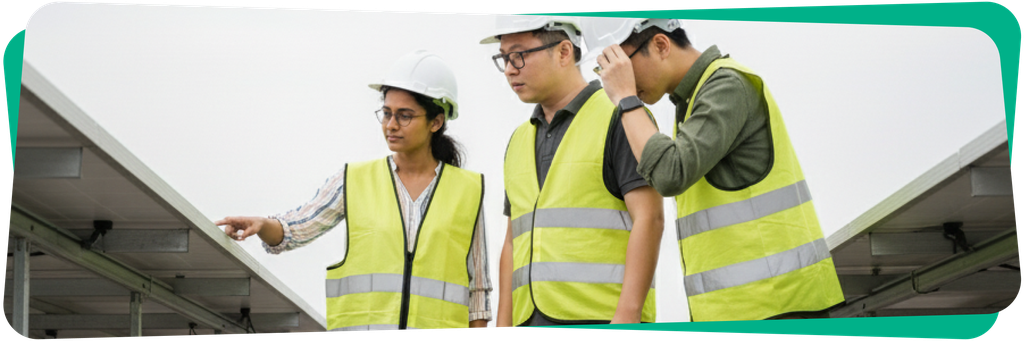
As Singapore accelerates its transition towards a low-carbon economy, sustainability has moved from a “nice to have” to a strategic business priority. Rising energy costs, tighter environmental regulations, and increasing stakeholder scrutiny mean that companies are now expected to demonstrate measurable climate action.
In this landscape, green energy for businesses is no longer about optics alone; it is a practical response to long-term operational, financial, and reputational risks. Companies that act early are not only supporting Singapore’s Green Plan 2030 but also strengthening their ability to manage risk, control long-term costs, and remain competitive in a changing market.
The conversation around green energy for businesses has also moved beyond compliance. Today’s customers want to know how responsibly a brand operates, while global partners and financiers increasingly evaluate ESG performance as part of doing business. For Singaporean companies operating across borders, sustainability credentials can influence everything from procurement decisions to partnership opportunities.
Recent geopolitical tensions have also highlighted how global conflicts can drive volatility in oil and gas prices. These fluctuations can ripple through global energy markets, influencing electricity costs in many countries. By integrating renewable energy into their operations, businesses can reduce exposure to these external shocks and improve long-term energy stability.
This growing momentum has led many organisations to ask a simple but important question: where do we start? Navigating green energy options can feel complex without clear guidance. This guide breaks down what green energy for businesses means in the Singaporean context, how it fits into the national energy system, and the practical pathways available. By understanding the fundamentals, businesses can move forward with confidence, making energy choices that are not only greener, but also commercially sound and more future-ready.
Key Takeaways
-
Renewable energy for businesses is practical and scalable in Singapore, with flexible options to suit different operational needs and budgets.
-
Sustainability delivers business value, supporting cost management, brand trust, and regulatory readiness over time.
-
A clear, compliant approach matters, ensuring renewable energy claims are credible while keeping the transition focused and manageable.
What Is Green Energy and How Does It Work?
Before exploring adoption strategies and benefits, it helps to start with the basics. At its simplest, green energy refers to electricity generated from renewable sources that are naturally replenished and produce significantly lower carbon emissions than fossil fuels.
Unlike conventional power derived from coal, oil, or gas, green energy supports lower-emission operations while contributing to long-term energy resilience, an increasingly important consideration for businesses operating in Singapore’s resource-constrained environment.
Definition and Core Features
Green energy is produced from sources such as solar, wind, hydro, and biomass. These resources are renewable by nature, meaning they do not deplete with use. For businesses in Singapore, the appeal lies not only in lower emissions but also in energy sources that align with sustainability reporting, ESG frameworks, and carbon reduction targets. When companies adopt green energy, they are effectively choosing power that supports cleaner operations without compromising reliability.
Types of Green Energy in Singapore
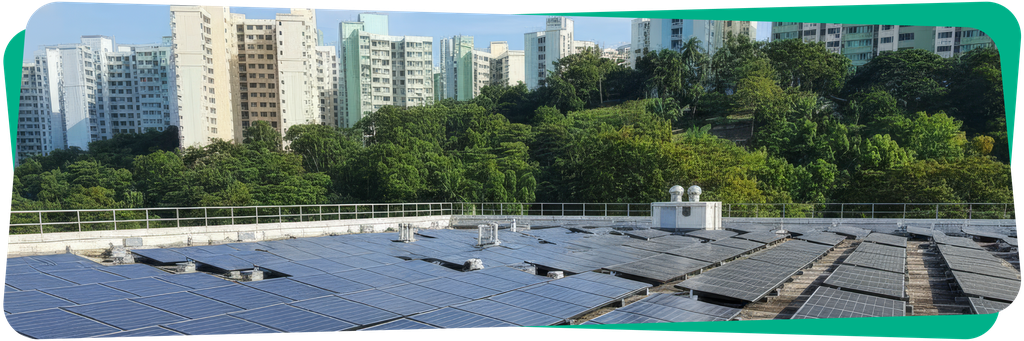
Given Singapore’s land constraints and tropical climate, solar energy is currently the most practical and widely adopted form of green energy. Rooftop solar panels installed on factories, warehouses, offices, and commercial buildings allow businesses to generate electricity on-site, directly reducing reliance on grid power.
For organisations without suitable roof space, alternative arrangements such as off-site solar participation still allow engagement with green energy for businesses. Other renewable sources, such as wind or hydro, are not feasible locally but may be accessed indirectly through regional imports and certification mechanisms.
Understanding Singapore’s Energy Mix and the National Grid
Singapore’s electricity grid is primarily powered by natural gas, chosen for its relative efficiency and lower emissions compared to other fossil fuels. While local solar energy is the main form of renewable electricity generated within Singapore, its overall contribution remains limited because of land constraints and the country’s dense urban environment.
To support the transition towards green energy for businesses, renewable electricity can also be accessed through mechanisms such as Renewable Energy Certificates (RECs). These certificates represent the environmental attributes of renewable energy generated elsewhere and allow companies to support renewable energy development even when the electricity supplied through the national grid remains largely natural gas–based.
Together, these approaches help organisations participate in Singapore’s broader energy transition while the share of renewable generation within the grid continues to evolve.
Looking ahead, Singapore’s energy plans focus on expanding solar capacity, exploring regional power imports, and developing low-carbon technologies, creating a future where green energy plays a growing role in everyday business operations.
Benefits of Green Energy for Businesses
With a clearer understanding of what green energy is and how it fits into Singapore’s energy landscape, the next question many organisations ask is why it makes business sense. Beyond environmental considerations, green energy delivers a range of practical, commercial, and strategic advantages that support long-term growth and resilience.
Cost Efficiency Over Time
While some green energy solutions, such as rooftop solar installations, require upfront investment, they often deliver cost efficiencies over their operational lifespan. Businesses that generate their own renewable power can reduce reliance on grid electricity and better manage exposure to fluctuating energy prices. Over time, these savings help offset initial costs and improve energy cost predictability.
Alternative models are also available for organisations that prefer to avoid large capital expenditure. Options such as power purchase agreements (PPAs) or solar leasing arrangements allow businesses to adopt solar energy with little to no upfront investment, as the system is installed and maintained by a third-party provider.
For many organisations, green energy for businesses becomes a long-term cost management strategy rather than a short-term expense.
Greater Energy Stability During Global Uncertainty
Energy markets are closely tied to global events, particularly conflicts or disruptions affecting fuel supply chains. The Israel-Iran conflict, for example, has created severe volatility in global energy markets, with oil prices briefly surging due to fears of major supply disruptions. This, in turn, influenced electricity costs in many regions.
By integrating renewable energy sources such as solar, businesses can reduce their exposure to these external shocks. Generating part of their own electricity or securing renewable energy through long-term agreements provides greater stability in energy costs and supply. This added resilience can help businesses plan more confidently during periods of geopolitical or market uncertainty.
Stronger Brand Reputation and Market Appeal
Sustainability is increasingly influencing how customers, partners, and employees evaluate businesses. Companies that commit to green energy signal responsibility, transparency, and forward thinking. This can strengthen brand trust, support customer loyalty, and enhance employer appeal, particularly among younger, values-driven talent. In competitive industries, credible sustainability action can also become a key differentiator.
Regulatory and Compliance Advantages
Environmental regulations and carbon-related policies are expected to tighten over time. By adopting green energy for businesses early, organisations can stay ahead of compliance requirements and reduce future exposure to carbon taxes or reporting pressures. Proactive adoption also makes it easier to align with ESG frameworks and sustainability disclosures that are becoming standard across many sectors, particularly in procurement.
Access to Government Support and Incentives
To support the transition towards a low-carbon economy, the Singapore government has introduced multiple initiatives to support businesses in adopting greener practices. Programmes under Enterprise Singapore focus on helping companies build sustainability capabilities, improve energy efficiency, and adopt low-carbon solutions. These include funding support for energy-efficient equipment, sustainability advisory services, and capability-building programmes that guide businesses through implementation.
Carbon-related schemes and financing options further reduce the barrier to entry, making green energy for businesses more accessible to both large enterprises and SMEs.
Together, these benefits reinforce that green energy is not just an environmental decision; it is a strategic business investment aligned with Singapore’s long-term economic and sustainability goals.
Options for Green Energy Supply in Singapore
Once a business decides to move towards green energy, the focus naturally shifts from why to how. In Singapore, companies are not limited to a single pathway. Instead, the energy landscape offers several flexible options that allow organisations to adopt green energy for businesses in ways that reflect their operational realities.
Solar Energy Solutions
Solar energy remains the most direct and established renewable option in Singapore. Businesses with access to rooftops or open spaces can install solar panels to generate electricity on-site, reducing reliance on grid power and stabilising long-term energy costs. For companies that prefer not to commit upfront capital, solar leasing and third-party ownership models provide an alternative. Under these arrangements, an external provider installs and maintains the system while the business purchases the energy produced.
Unbundled Renewable Energy Certificates (RECs) Procurement
Unlike carbon credits, unbundled RECs allow businesses to have precise controls over the renewable energy sources required to meet their sustainability reporting. This option is particularly useful for organisations seeking to meet ESG commitments, as they have full control over the procurement, from country of origin, vintage and technology type. By purchasing RECs, businesses can credibly claim the use of renewable electricity for supporting their business operations, even while remaining connected to conventional grid electricity.
Renewable Energy Plans With Third-Party Retailers (matched with RECs)
For businesses operating in rented spaces or buildings where solar installation is not feasible, green electricity retail plans provide a convenient entry point into green energy for businesses. These plans supply electricity matched with RECs. While the electricity still flows through the national grid, the renewable attributes are accounted for separately through the certificates.
Compared to procuring unbundled RECs directly, green electricity retail plans typically offer limited customisation. Businesses generally do not select attributes such as the country of origin, generation vintage, or renewable technology type. However, these plans remain one of the most cost-effective ways for organisations to begin incorporating renewable energy into their operations.
Carbon Offsetting Options
For emissions that cannot yet be reduced through energy sourcing alone, carbon offsetting offers a complementary approach. Offset programmes typically support projects such as reforestation, renewable energy development, or clean water initiatives. However, offsetting can form part of a broader strategy when paired with green energy for businesses, rather than a standalone solution.
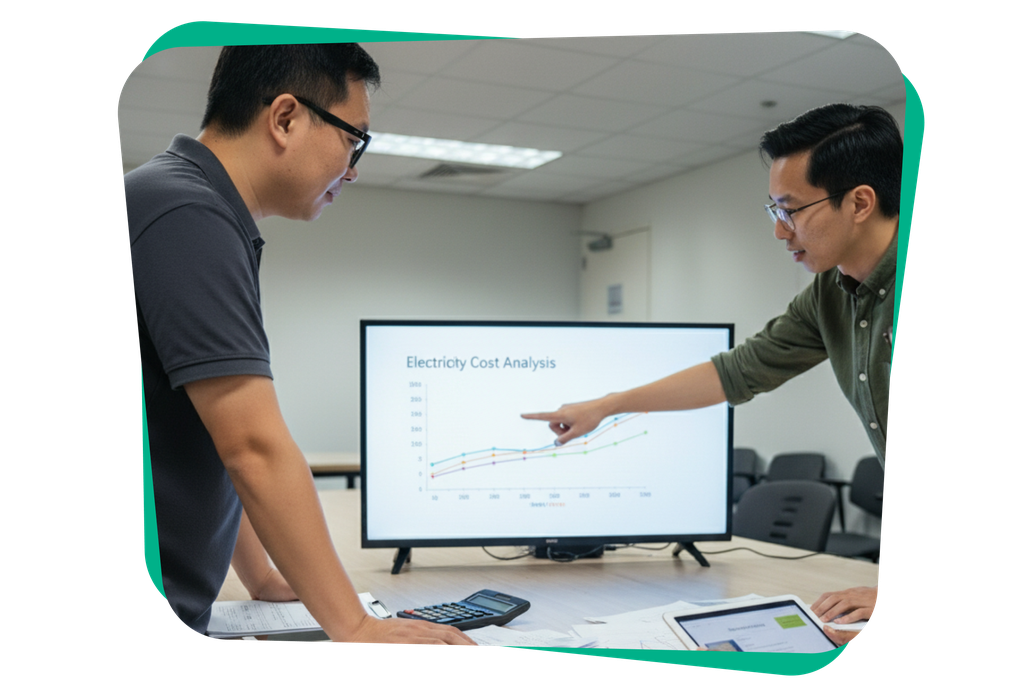
Whether a company chooses on-site solar, green electricity retail plans, Renewable Energy Certificates (RECs), or a combination of approaches, the key lies in selecting solutions that align with operational realities and sustainability goals. Navigating these choices, however, requires clarity around feasibility, cost, and long-term impact.
This is where our experienced energy team at Flo Energy plays a valuable role, helping businesses evaluate options, structure the right mix of solutions, and build a credible green energy strategy that supports both environmental commitments and commercial objectives.
How to Make the Switch: A Step-by-Step Guide
With the available green energy pathways clearly defined, the focus shifts to execution. While transitioning to green energy for businesses can feel complex at first, a structured, step-by-step approach helps organisations move forward with clarity and confidence, without disrupting day-to-day operations.
1. Start with an Energy Audit
Every successful transition begins with understanding current energy usage. An energy audit provides insight into consumption patterns, peak demand periods, and areas of inefficiency. This data-driven view allows businesses to identify where renewable integration or energy optimisation will have the greatest impact.
2. Choose a Suitable Green Energy Path
Once consumption is understood, businesses can evaluate which green energy options best suit their needs. Some may prioritise on-site solar generation, while others may opt for green electricity retail plans or RECs due to space or lease constraints. Our team will work closely with businesses to compare these options holistically, balancing operational feasibility, sustainability targets, and long-term flexibility, so that green energy for businesses integrates smoothly into existing operations.
3. Evaluate Costs and Return on Investment
Financial considerations remain central to decision-making. Beyond upfront costs, businesses should assess long-term energy savings, price stability, and available government grants or tax incentives. In this process, we help businesses model costs and potential returns, providing clearer visibility into how green energy for businesses can deliver value over time rather than being viewed as a short-term expense.
4. Engage Stakeholders Early
A successful energy transition extends beyond infrastructure. Internally, teams need to understand how sustainability initiatives support broader business objectives. Externally, communicating green commitments strengthens brand credibility and stakeholder trust. With our guidance, companies can frame their green energy journey clearly and credibly, building alignment, adoption, and long-term impact.
By taking a structured approach, businesses can turn sustainability intent into measurable progress with confidence.
Frequently Asked Questions (FAQ)
The cost of green energy for businesses depends largely on how your business chooses to acquire it. There are two common routes: installing renewable energy systems such as solar panels or purchasing certified green electricity.
-
Solar Panel Installation - Businesses that invest in their own solar systems typically face higher upfront capital expenditure (CAPEX). However, once installed, these systems can significantly reduce monthly electricity bills and provide long-term savings over their lifespan.
-
Unbundled Renewable Energy Certificates or Green Electricity Retail Plans - Companies that opt to purchase green electricity through green electricity retail plans or unbundled RECs generally avoid high upfront costs. The price of these plans can be comparable to traditional electricity rates, though not necessarily cheaper, as it depends on market conditions and contract terms.
Additionally, businesses in Singapore can take advantage of government grants, tax incentives, and financing schemes to ease the transition. These initiatives help offset costs and encourage wider adoption of renewable energy solutions.
Yes. There are scalable green energy options designed specifically for SMEs, such as green retail energy plans and RECs. These allow SMEs to adopt sustainable business energy solutions without major capital expenditure.
Yes. The Singapore government offers several schemes, such as the Energy Efficiency Fund (E2F), Enterprise Sustainability Programme, and other green grants that help businesses defray the costs of energy-efficient equipment and renewable energy adoption.
Moving Forward with Confidence and Clarity
Embracing green energy for businesses is no longer a future aspiration; it is a practical and strategic step companies can take today. As energy costs rise and sustainability expectations become more defined, businesses that act early gain greater control over risk, compliance, and long-term operational resilience. From understanding how green energy works within Singapore’s grid to evaluating supply options and executing a structured transition, the path forward is clearer and more accessible than ever.
What matters most is choosing solutions that are credible, scalable, and aligned with both business objectives and regulatory standards. Whether through solar, green electricity plans, or RECs, green energy for businesses can be adopted progressively, allowing organisations to start where they are and build momentum over time.
At Flo Energy, we make it simple for businesses to switch to affordable, renewable energy in Singapore through electricity plans that balance cost, compliance, and sustainability, so you can stay focused on running your business. Every Flo Energy plan includes the Flo Commitment, where 100% of your electricity usage is matched with regional Renewable Energy Certificates (RECs).
These RECs are sourced from accredited renewable generators in the region, verified by trusted global registries, and redeemed on your behalf in line with Singapore Standards 673, giving you confidence that your renewable energy claims are credible and compliant.
Ready to take the next step? Speak with our team today to explore how your business can adopt green energy with clarity, confidence, and long-term value.

In Conclusion
Using RECs strategically enables businesses in Singapore to support clean energy, reduce emissions, and achieve their sustainability goals without the need for large infrastructure investments.
So, if you’re looking to make the change, Flo Energy makes going green effortless. With affordable, 100% renewable electricity plans and no hidden fees, your business can confidently meet its sustainability goals. Flo handles all the Renewable Energy Certificates on your behalf, sourced from trusted regional generators and compliant with Singapore Standards 673, so you can make credible renewable energy claims with ease. With a simple signup process and a dedicated support team, switching to clean energy has never been this straightforward, or this impactful.