How Singapore households are using energy more efficiently
Integrating Green Energy into Singapore's Smart Homes
Introduction
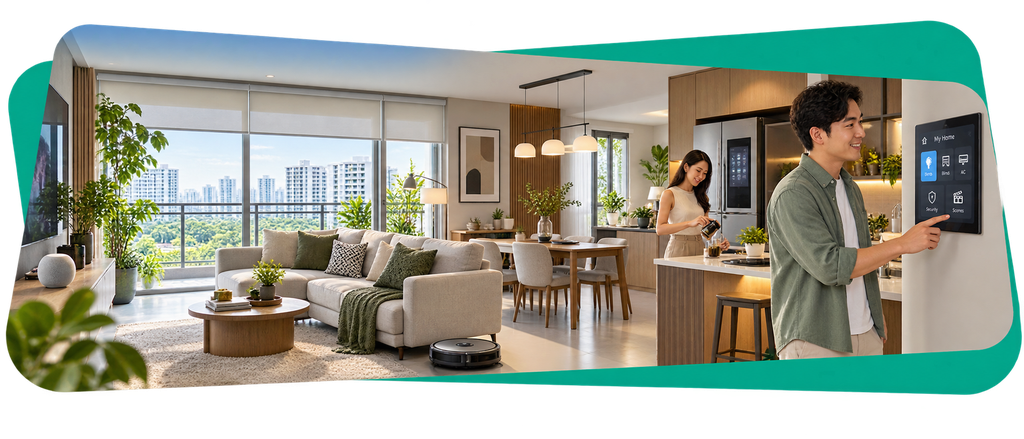
Imagine leaving home and having your lights switch off automatically, your air conditioner adjusting itself, and your phone showing exactly how much electricity your household used that morning. 😌
This is no longer a futuristic idea. Connected lights, appliances, sensors, and energy-monitoring tools are becoming increasingly accessible to Singapore households. When combined with cleaner electricity and more efficient equipment, they can help homeowners reduce their carbon footprint and electricity bills without compromising convenience.
In this guide, we explore the green technologies available for smart home integration in Singapore, how smart devices can improve efficiency, and the practical steps involved in creating a more sustainable home.
Key Takeaways
-
Green energy options vary by housing type, roof access and building rules.
-
Landed homes have the most flexibility for solar panels and batteries, while condominium and HDB residents may rely more on shared solar systems, smart meters and renewable electricity plans.
-
Smart home integration can help households track electricity use, automate daily routines and reduce unnecessary consumption.
-
Rooftop solar works best when more of the electricity generated is used during the day, while battery storage may help households with higher evening demand.
-
Start with the biggest energy users, such as air conditioning, water heaters and major appliances, before adding smaller smart devices.
-
A staged approach makes smart home integration more affordable. You can begin with energy monitoring and simple controls, then add solar, batteries or electric-vehicle charging later.
What Green Energy Options Are Available for Singapore Homes?
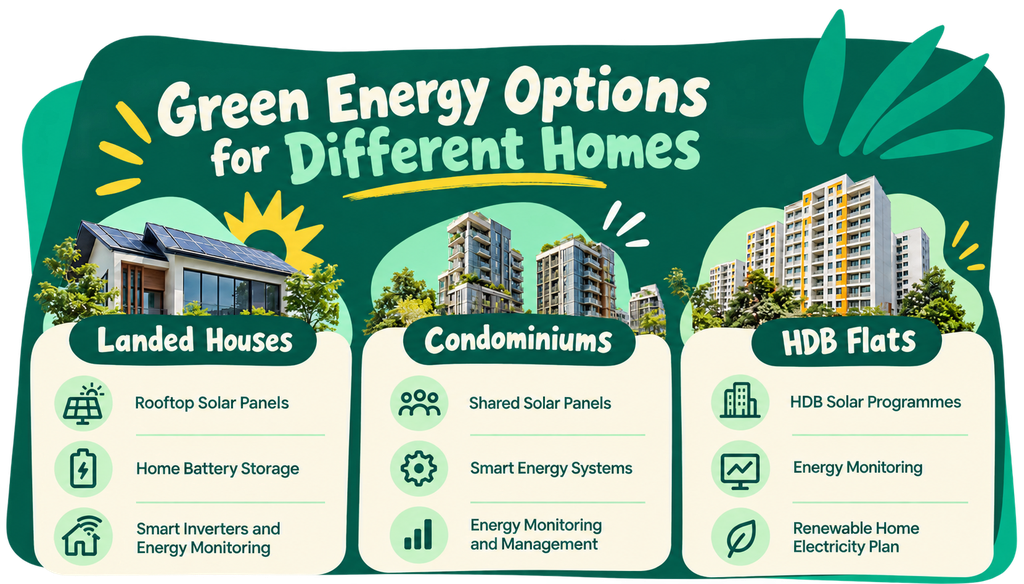
There is no single setup that works for every household. Your options will depend on your property type, roof access, budget, renovation plans, and building rules.
Landed houses
Landed properties generally provide the most flexibility for residential green energy projects and smart home integration.
1. Rooftop Solar Panels
In Singapore, landed homes generally offer the greatest potential for solar power because homeowners have more control over their roof space. Solar photovoltaic panels convert sunlight into electricity that can power appliances, lighting, and cooling systems during the day.
Before proceeding with installation, an installer will need to assess the roof’s size, condition, orientation, and exposure to shade. You should also compare the system’s expected annual output with your daytime electricity use, as solar panels provide the greatest benefit when more of the generated electricity is consumed directly within the home.
2. Home Battery Storage
Home battery storage solutions work alongside solar panels by storing electricity that is not used immediately. Instead of exporting all excess solar power to the grid, the household can keep part of it for use after sunset, when the panels are no longer generating electricity.
For example, electricity collected in the afternoon may be used later to power lighting, fans, refrigerators or selected appliances in the evening. However, batteries add significantly to the cost of a solar setup, so homeowners should first determine how much excess electricity their panels are likely to generate and whether evening consumption is high enough to justify the storage capacity.
3. Smart Inverters and Energy Monitoring
A solar inverter converts the direct current electricity produced by solar panels into alternating current electricity that household appliances can use. A smart inverter also helps direct electricity between the panels, the home, the battery, and the grid, depending on where it is needed at that moment.
From there, energy-monitoring tools display this information through an app or online dashboard. You’ll be able to see how much solar electricity is being generated, how much is being consumed, how much is stored, and how much is exported. With smart home integration, you can then schedule appliances such as washing machines or water heaters to operate during periods of stronger solar generation.
Condominiums
1. Shared Solar Panels
Installing solar panels in a condominium is more complex because the rooftop and many external areas are common property managed by the Management Corporation Strata Title (MCST). Some newer developments have adopted shared solar systems that generate electricity for common facilities such as lifts, corridor lighting, water pumps, and clubhouse facilities. This can help reduce the condominium's shared electricity costs.
2. Smart Energy Systems
For most condominium residents, smart energy systems provide a more accessible way to improve energy efficiency. Smart plugs, connected lighting, air-conditioning controls, and energy-monitoring devices allow residents to track electricity consumption, identify energy-hungry appliances and automate daily routines. Combined with smart home integration, these devices help households reduce unnecessary electricity use without requiring major building modifications.
HDB flats
1. HDB solar programmes
While individual HDB households cannot install private solar panels on common rooftops, HDB has been progressively installing solar panels on suitable residential blocks through initiatives such as the SolarNova programme. These large-scale systems generate electricity to support common services within the estate, including lifts, corridor lighting, water pumps, and other shared facilities.
Although residents do not directly receive electricity from these rooftop panels for their own homes, the programme contributes to Singapore's transition towards sustainable renewable energy.
2. Energy monitoring
Without access to private rooftop solar, HDB residents can still make meaningful improvements to their home's energy performance. The government has been progressively upgrading households to smart meters, which record consumption at half-hourly intervals and provide more detailed usage data than traditional meters.
HDB homeowners who want additional support may also explore Flo Energy’s smart electricity meter solutions. Through the FlowSmart Dashboard, Flo Energy customers can view real-time electricity usage updates in one place, making it easier to spot high-consumption periods, understand daily usage patterns and make more informed decisions about where to cut unnecessary energy use.
3. Renewable home electricity plans
HDB homeowners can support cleaner energy by switching to a renewable home electricity plan. Flo Energy’s residential plans make this easier by matching 100% of a household’s electricity usage with regional Renewable Energy Certificates (RECs), which Flo purchases and redeems on the customer’s behalf. This allows your household to support renewable energy in Singapore without installing solar panels or changing how you use electricity at home.
Practical Tips for Green Energy and Smart Home Integration
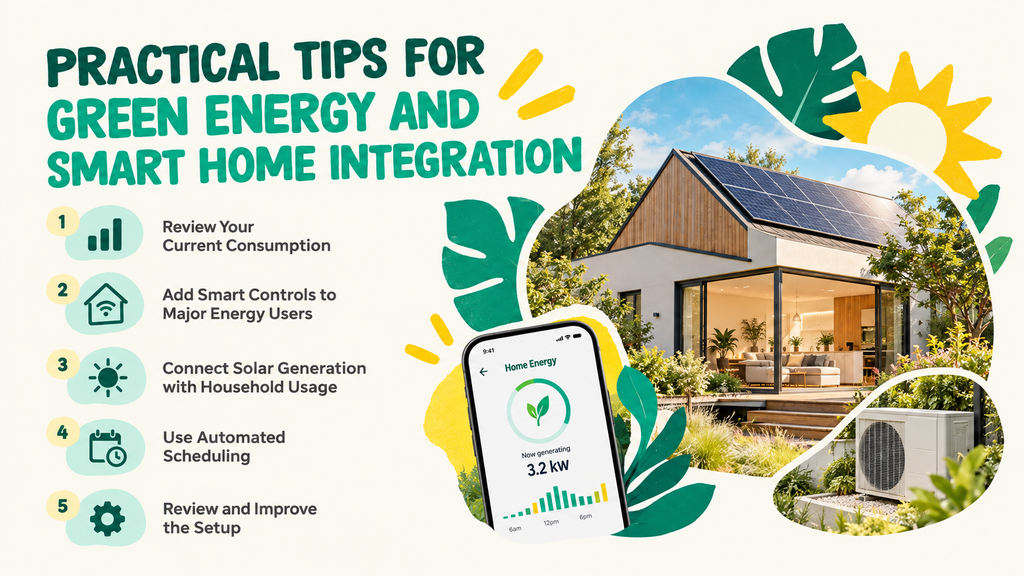
Major renovations are not always necessary for green energy and smart home integration. A staged approach is often more affordable and easier to manage.
1. Review Your Current Consumption
Start by understanding how and when your household uses electricity. Review recent bills and smart meter data to identify periods of high consumption.
Pay particular attention to:
- How many hours your air conditioners run each day
- Whether several major appliances operate at the same time
- Which devices are regularly left on or on standby
- Whether your electricity use is higher during the day or evening
- How consumption changes on weekdays and weekends
This assessment helps you identify where smart home integration or green energy systems could have the greatest impact. Landed homeowners who use more electricity during the day may benefit from consuming rooftop solar power as it is generated. A household that uses considerably more energy after sunset may consider whether battery storage could meet part of its evening demand.
2. Add Smart Controls to Major Energy Users
Focus first on equipment that consumes the most electricity. In many Singapore homes, this includes air conditioners, water heaters, refrigerators and clothes dryers.
Useful smart devices may include:
- Smart air-conditioning controls: These adjust cooling based on room occupancy, temperature, time of day or household preferences. NEA estimates that raising the air-conditioner temperature by 1°C can save about 3% on utility costs, although actual savings will vary.
- Smart plugs: Switch selected appliances off automatically or allow remote control through a mobile app.
- Motion sensors: Turn lights on only when someone enters a room and switch them off when the space is empty.
- Programmable lighting: Dim or switch off lights at selected times. Connected appliances: Allow residents to monitor cycles, receive alerts or schedule operation.
Through smart home integration, these devices can be coordinated instead of controlled separately. For example, a “leaving home” setting could switch off the lights, reduce air-conditioning and disconnect selected standby devices at the same time.
3. Connect solar generation with household usage
For homes with rooftop solar, smart home integration can help residents use more of the electricity generated during the day.
Homeowners may schedule suitable activities during stronger solar-production periods, such as:
- Running the washing machine
- Charging laptops and other devices
- Heating water
- Operating pool pumps
- Charging an electric vehicle
- Running selected kitchen appliances
Using solar electricity as it is generated can reduce the amount drawn from the grid. It may also reduce the need to export excess electricity or store it in a battery.
4. Use Automated Scheduling
Automated schedules help energy-saving actions happen consistently without relying on residents to remember them every day.
Examples include:
- Switching off common-area lights after bedtime
- Reducing air-conditioning when rooms are empty
- Turning off entertainment systems overnight
- Running selected appliances during daylight hours
- Charging batteries when solar output is high
- Switching devices off when the household leaves home
Some systems can also adjust settings based on occupancy, weather conditions, or past usage patterns. However, these recommendations should still be reviewed regularly to ensure they match the household’s current routine and align with your smart home integration.
5. Review and Improve the Setup
Once the system is operating, compare electricity use before and after each upgrade.
Ask:
- Has overall consumption fallen?
- Are automated schedules still useful?
- Is the household using more solar electricity directly?
- Are residents frequently overriding the settings?
- Are alerts identifying meaningful problems? Is the system easy for everyone to use?
Effective smart home integration should simplify energy management. It should not require residents to constantly check multiple apps or adjust complicated settings. The best setup is one that supports everyday routines while making energy-saving actions easier, more consistent and easier to measure.
Benefits of combining green energy and smart technology
1. Better control over monthly electricity use
Smart home integration gives you a clearer picture of when and where electricity is being used. Instead of waiting for the monthly bill, you can spot unusual consumption early, adjust cooling schedules and switch off appliances that are running unnecessarily.
For homes with solar panels, smart controls can also shift selected activities to daylight hours, helping you use more of the electricity generated on-site rather than drawing from the grid later.
2. A practical way to lower your carbon footprint
A greener home starts with using less energy where possible. Automated controls can reduce waste, while solar panels and renewable electricity plans allow households to support cleaner sources of power.
This matters in Singapore, where natural gas still supplies most of the country’s electricity. Each improvement may seem small on its own, but together they can reduce the environmental impact of everyday household activities.
3. Everyday comfort with less effort
Saving energy does not have to mean constantly checking switches or changing settings. Effective smart home integration can handle routine adjustments in the background, such as switching off lights in empty rooms or reducing air-conditioning when no one is home.
You can also create simple routines for different parts of the day. A “leaving home” setting, for example, could turn off selected lights, plugs and cooling systems with one command.
4. A home that can evolve with you
You do not need to install every technology at once. Many households can begin with energy monitoring and smart home integration, then add solar panels, battery storage or electric-vehicle charging when their needs and budget change.
Choosing compatible devices from the start makes future upgrades easier. This allows the smart home system to grow with your household rather than becoming outdated after a few years.
Frequently Asked Questions (FAQ)
Usually, no. Solar panels can reduce how much electricity a landed home draws from the grid, but most homes will still need grid electricity at night or during periods of low sunlight.
With smart home integration, homeowners can schedule appliances to run during the day, when solar generation is higher. Battery storage can also keep some excess solar electricity for evening use.
The cost of smart home integration varies depending on the scale of the system, but it typically starts from S$1,600 to a few thousand dollars. Factors affecting the total price include the number of devices, level of automation, and whether the setup includes solar panels, battery storage, or electrical work. This also means that automating a landed home will generally cost more than a condominium or HDB.
You can start with lower-cost upgrades that manage major energy users, such as air-conditioning controls, then expand the system as your needs and budget grow.
There are currently no broad government grants that cover full smart home integration systems, residential solar panels or home batteries. However, eligible households can use up to S$400 in Climate Vouchers for approved energy- and water-efficient products.
These vouchers can help offset the cost of items such as energy-efficient air conditioners, refrigerators, washing machines, five-tick clothes dryers, induction stoves and selected water fittings at participating retailers.
Building a Greener Home, One Practical Step at a Time
Creating a greener home does not have to mean investing in every new technology at once. Whether you start with smart home integration, energy monitoring, a renewable electricity plan, or rooftop solar, each step can help you better understand your electricity use and support a cleaner energy future.
At Flo Energy, we make that transition simpler. From our FlowSmart Dashboard, which gives you greater visibility into your electricity usage, to residential plans backed by 100% RECs, we help homeowners adopt renewable energy in a way that fits their home and lifestyle. Get in touch with us to explore practical, energy-efficient solutions today.